How to Avoid Electrical Hazards in Your Microwave – Safety Tips for Homes in Kolkata
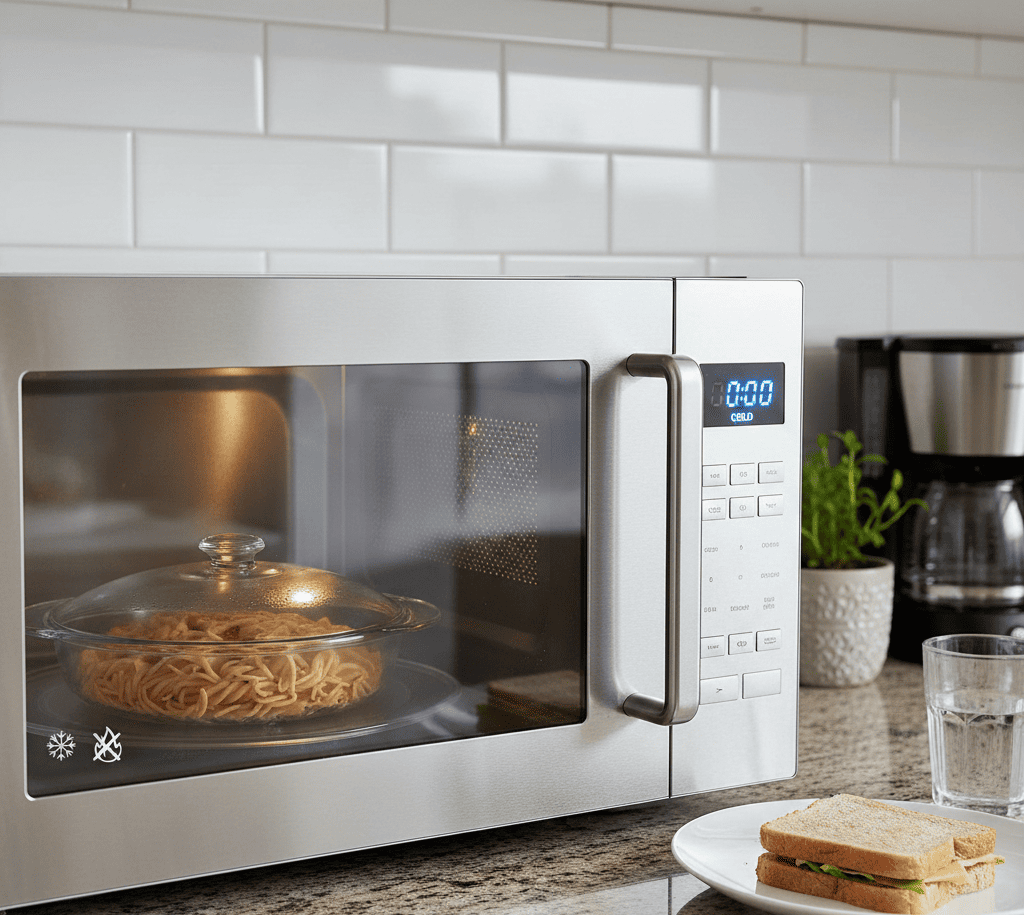
In most Kolkata homes today, the microwave has become an essential part of the kitchen routine. Whether you stay in Salt Lake, Behala, Tollygunge, Garia, New Town, or any other part of the city, the microwave is used several times a day to warm food, prepare quick snacks, and defrost frozen items. But even though it feels simple to operate, a microwave runs on high-voltage electrical components that require careful handling.
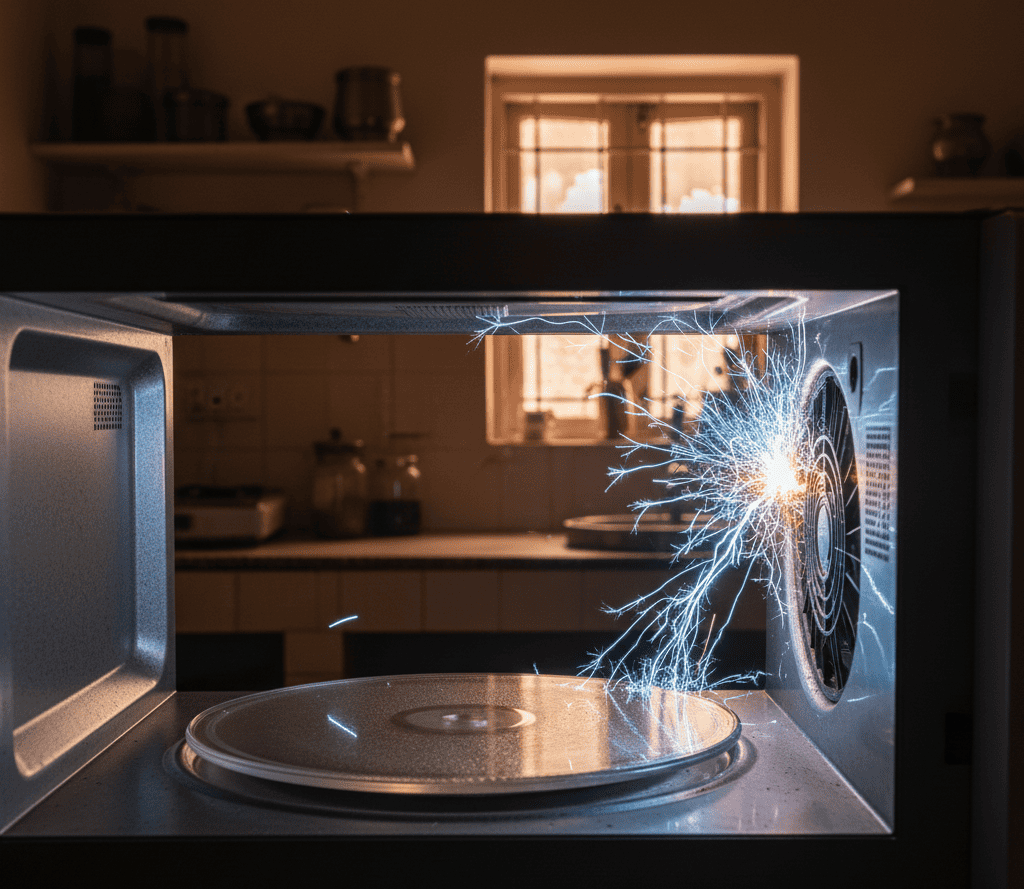
Electrical hazards in microwaves often build up slowly—through moisture, worn-out wiring, poor cleaning habits, or incorrect usage. Because these issues are usually hidden behind the metal body of the appliance, most people notice them only when something goes wrong: a spark flashes inside, a burning smell develops, or the appliance suddenly switches off.
Understanding how to prevent electrical hazards is extremely important, especially in a city like Kolkata where humidity, steam, and continuous usage can affect kitchen appliances faster than expected. This guide covers the most common risks and explains how to keep your microwave safe through proper care and maintenance.
Why Electrical Safety Matters for Microwaves in Kolkata
A microwave may look compact, but internally it contains sensitive and powerful electrical components such as the magnetron, high-voltage transformer, capacitors, and door safety switches. These parts work together to create the electromagnetic waves that heat your food.
If any of these components are weakened, exposed to moisture, or overheated, the microwave becomes unsafe. Kolkata’s climate—especially the monsoon months—can increase the chances of electrical faults, making safety checks even more important.
Use a Proper Power Source for Your Microwave
Many electrical hazards start at the socket. Plugging a microwave into a multipurpose extension board or a low-quality adapter increases the risk of overheating and sparks. Microwaves draw a significant amount of power and should always be connected to a dedicated wall socket.
A proper socket helps prevent:
• Overheating of wiring
• Burn marks or melting
• Sudden short circuits
• Stress on internal electrical parts
If the socket or plug becomes warm during use, treat it as an early warning sign and get the wiring checked.
Protect the Appliance from Kolkata’s Voltage Fluctuations
Power fluctuations can damage microwave components within seconds. Areas across Kolkata often experience voltage drops during storms or sudden spikes during power restorations. The magnetron and control board are extremely sensitive to these variations.
A voltage stabilizer or surge protector acts as a shield and prevents electrical shocks to the internal system. This is one of the simplest but most effective ways to avoid hazards.
Never Operate the Microwave When Empty
Running a microwave without food inside forces the magnetron to generate energy with nowhere to distribute it. This creates internal overheating and increases the chance of electrical damage.
Even a short empty run can weaken the magnetron. Always check the inside before pressing start, especially in busy households where multiple people use the microwave.
Keep Moisture Away from the Microwave
Moisture is one of the biggest enemies of electrical appliances. In Kolkata’s humid climate, moisture easily enters the control panel, ventilation grills, and internal wiring. When steam from cooking settles near the microwave, it increases the risk of electrical faults.
To keep moisture away:
• Avoid placing the microwave too close to the gas stove
• Make sure the kitchen has proper ventilation
• Wipe the inner cavity after heating high-moisture foods
• Leave the door open for a minute after use to let steam escape
Moisture protection is essential to prevent internal electrical reactions.
Check the Power Cord for Any Damage
A damaged power cord is a serious hazard. Bent wires, cracks in the insulation, burnt spots, or loose plugs can cause shocks or short circuits. In many Kolkata homes, the appliance is shifted often, which bends the power cord repeatedly.
Make sure the cord stays away from heat sources and sharp edges. If you notice even minor damage, get it replaced by a trained microwave technician instead of taping it yourself.
Keep the Interior Clean to Prevent Sparks
Grease buildup is one of the most common causes of sparking inside microwaves. Kolkata kitchens often deal with heavy cooking, which means oil and steam settle inside the appliance. When these deposits remain for long, they burn during heating and create sparks.
Cleaning the interior regularly helps avoid electrical arcing and protects the waveguide cover from damage. Use mild soap or a steam-cleaning method. Avoid metal scrubbers or harsh chemicals.
Use Only Microwave-Safe Utensils
Metal reflects microwave energy and causes instant sparks. Even dishes with metallic prints or gold rims can trigger electrical discharge. Cracked microwave-safe bowls can also lead to uneven heating and internal damage.
To stay safe:
• Use only microwave-approved glass, ceramic, or safe plastic
• Avoid aluminium foil and steel containers
• Stop the appliance immediately if you see a spark
Many cases of internal burning start simply because the wrong utensil was used.
Check the Door Condition Frequently
The microwave door is a critical safety feature. It contains switches that must close perfectly to keep electromagnetic waves inside the appliance. If the door becomes loose, bent, or misaligned, the microwave may operate unsafely.
Warning signs of door trouble include:
• The microwave starts only when you push the door
• The door doesn’t shut smoothly
• Light stays on after closing
• A burning smell near the hinge
• A gap between the door and the frame
These issues should never be ignored. Faulty door switches or hinges can create electrical risks and should be repaired quickly.
Avoid Repairing Internal Components Yourself
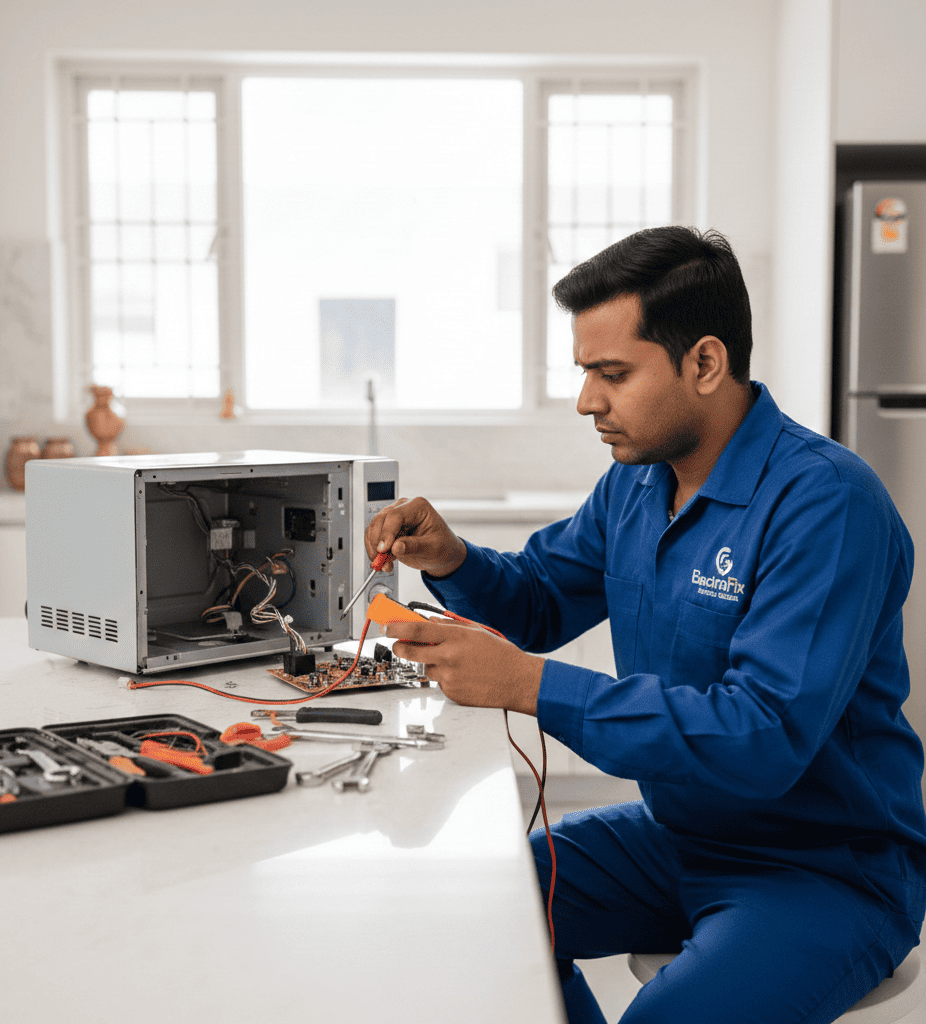
Microwaves contain high-voltage capacitors that store electricity even when unplugged. Opening or repairing internal parts without training can be extremely dangerous. Home repairs often lead to shocks, burns, or further appliance damage.
Only trained microwave technicians in Kolkata should handle internal wiring, capacitors, or door switch replacements.
Schedule Regular Servicing to Detect Hidden Risks
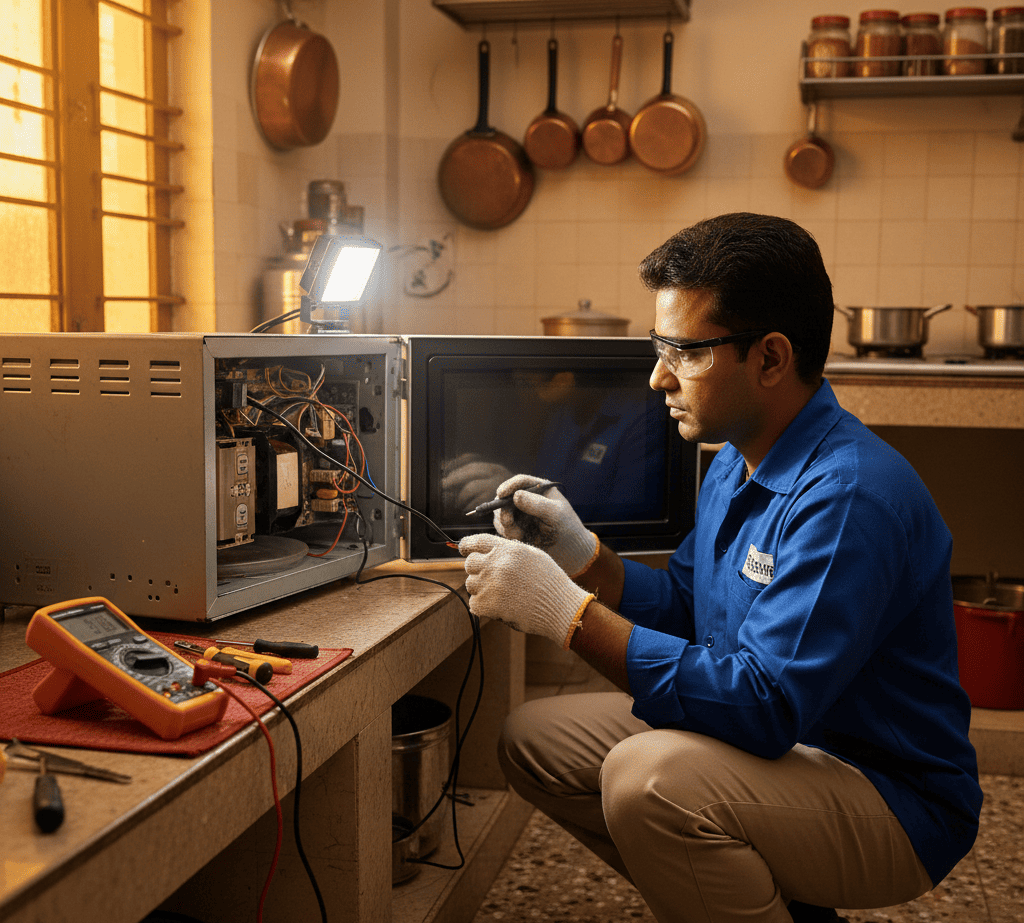
Many electrical faults remain invisible until a serious problem occurs. Regular servicing helps identify issues before they turn into hazards.
A technician inspects:
• Wiring and electrical connections
• Magnetron condition
• Door interlock switches
• Control panel health
• Ventilation blockages
• Capacitor and transformer safety
• Burn marks or overheating signs
Given the heavy usage and climate conditions in Kolkata, servicing once every six to twelve months is ideal. This ensures safety, performance, and longevity.
Servicing also improves heating efficiency, reduces electricity consumption, and prevents unexpected breakdowns.

Final
Electrical hazards in microwaves can be prevented easily with careful usage, routine checks, and timely servicing. If your microwave shows signs such as sparks, a burning smell, noise, heating issues, or door problems, don’t ignore them.
You can book a professional microwave safety inspection and repair in Kolkata today to keep your home protected and your appliance running safely.