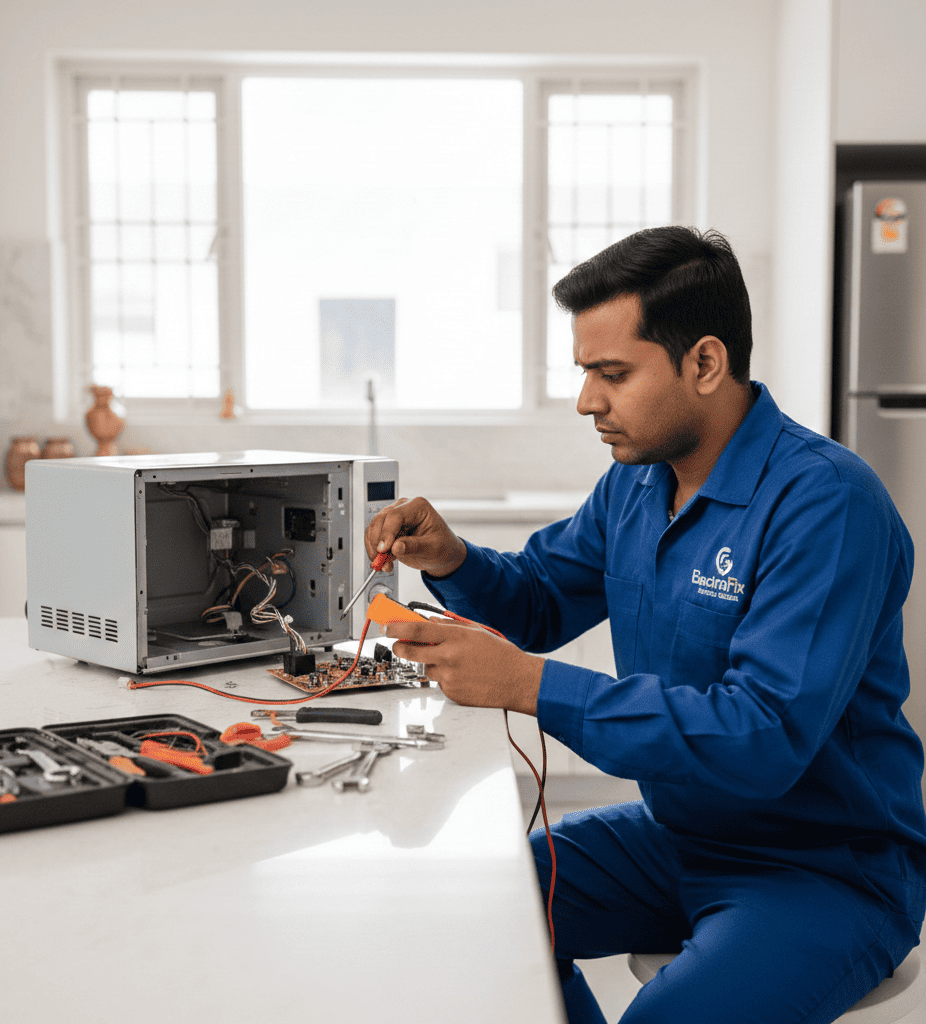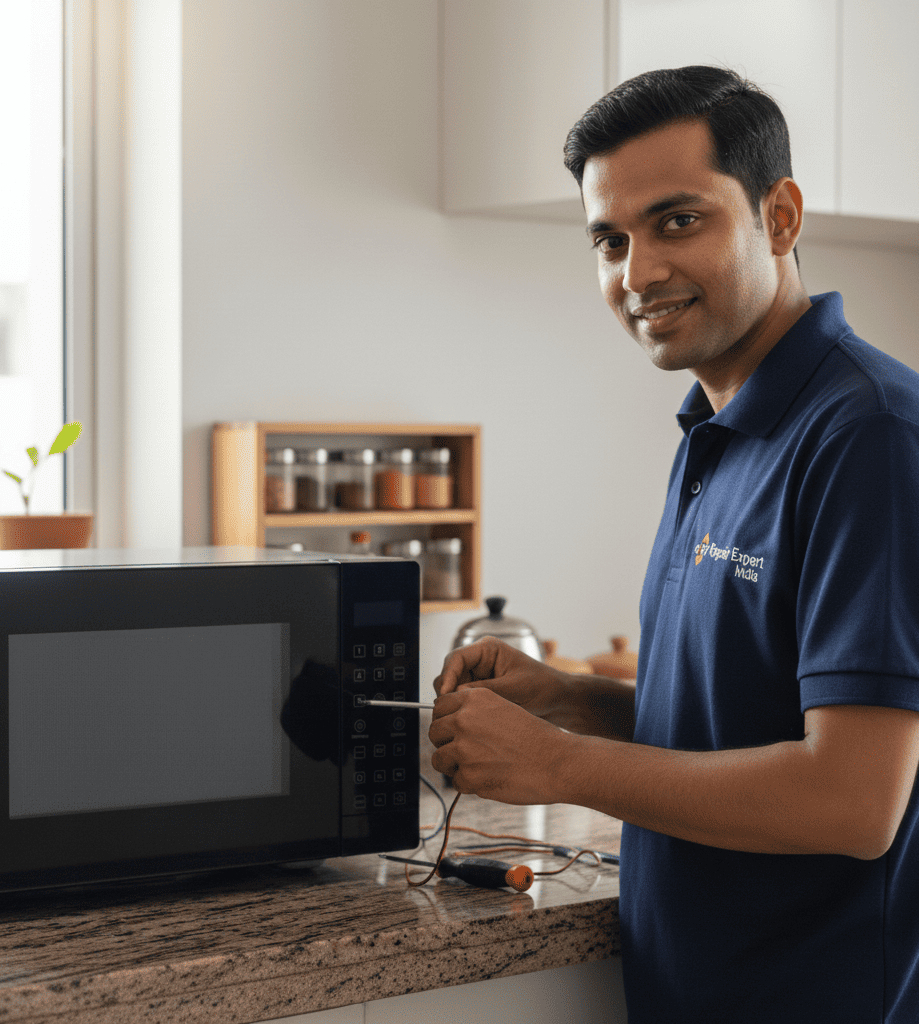
Microwave Not Heating? What You Should Check Before Calling a Technician
A microwave is one of those appliances you don’t think about much until the moment it stops heating. You press the button, the light comes on, the turntable rotates, the timer counts down… but the food stays cold.
This is a very common issue in Kolkata households, especially in areas where voltage fluctuations and moisture levels are higher — such as Salt Lake, Behala, Howrah, New Town, Garia, and Dum Dum.
Before you assume your microwave is damaged beyond repair, it’s worth knowing that many “not heating” problems are caused by simple issues. Some can be checked at home safely, while others need a trained technician.
This guide walks you through the most likely reasons why your microwave is not heating and what you should check first.
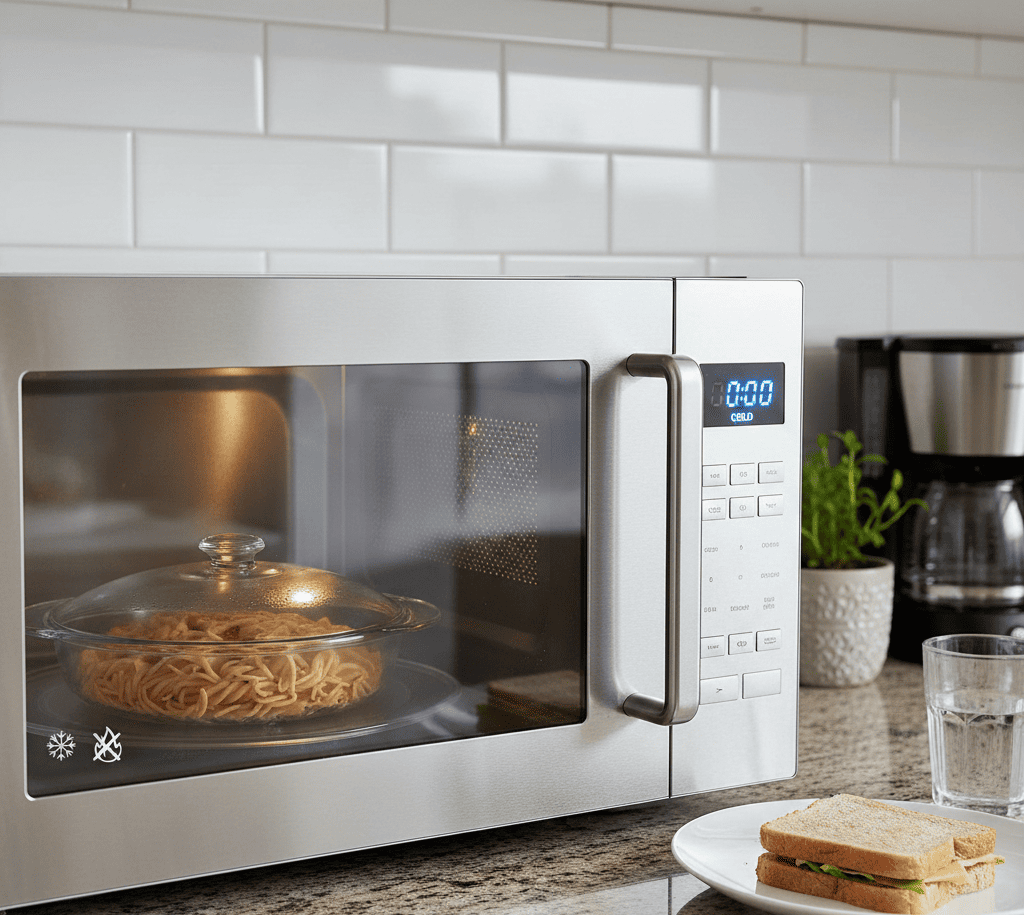
First Check the Power Supply (Most Common Overlooked Reason)
A microwave needs steady voltage to produce heat. In many Kolkata neighborhoods, electricity can fluctuate, especially during monsoon or summer when load increases.
Here’s what you should check:
- Try plugging the microwave into a different socket
- Ensure the plug is fully inserted
- Check if other appliances work on the same outlet
- Look for signs of a loose connection
In some cases, the microwave will switch on normally but won’t heat because the power supply is weak. This happens frequently in older homes or during voltage drops.
If switching sockets solves the issue, your microwave is fine — the wiring or outlet is the problem.
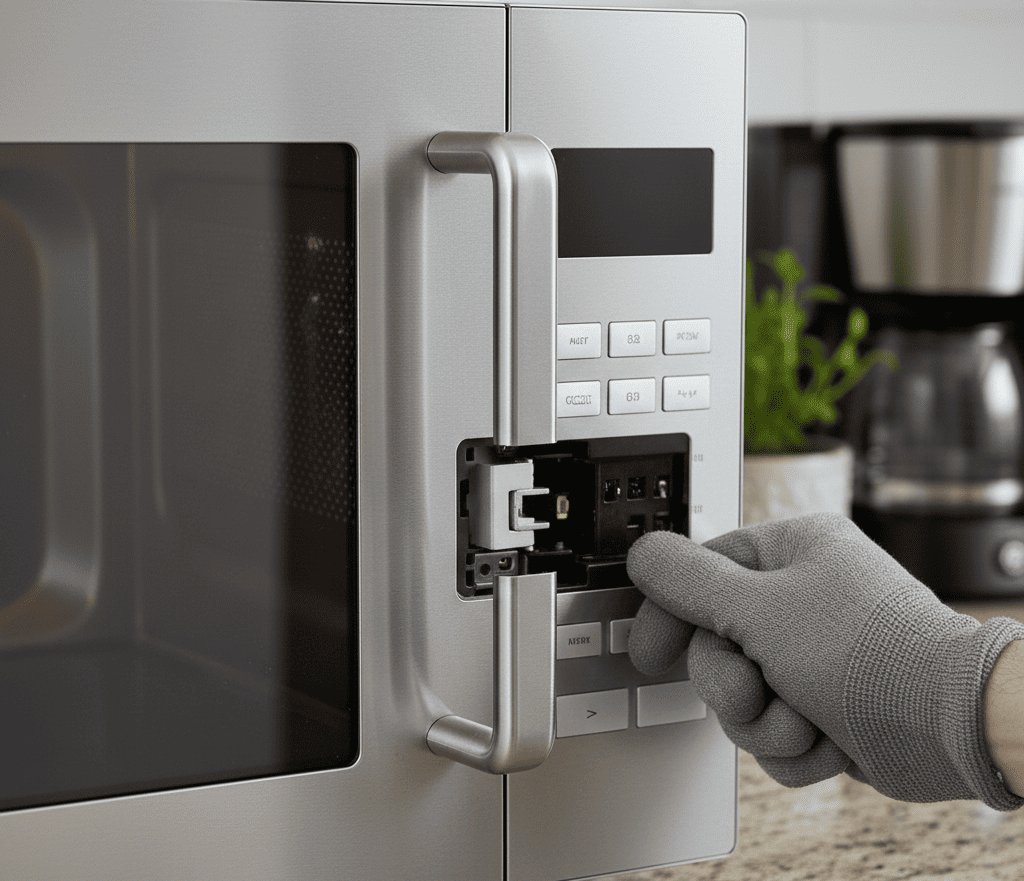
Make Sure the Door Is Locking Properly
A microwave is designed with multiple safety switches. If even one of them doesn’t click into place, the heating mechanism is automatically disabled.
Common door-related issues include:
- A worn-out latch
- A misaligned or loose hinge
- A damaged door switch
- Food debris stuck around the frame
The microwave may look like it’s working, but without a proper door lock, it will never begin heating.
A quick cleaning around the door and frame sometimes resolves the problem. But if the door switch or latch is broken, it will need replacement.
A Faulty Magnetron — The Heart of the Heating System
The magnetron generates the microwave energy that heats your food. If it fails, your microwave will run normally but produce zero heat.
Signs pointing to magnetron trouble:
- A burning smell
- Food remaining cold even after long heating cycles
- Low humming or buzzing sounds
- Microwave heats very unevenly
Why magnetrons fail:
- Running the microwave empty
- Using metal utensils
- Power surges
- Appliance age or overuse
Kolkata’s humidity also plays a role; moisture can slowly damage internal components over time.
A magnetron replacement is a technician-level job. It involves high voltage and requires proper tools and expertise.
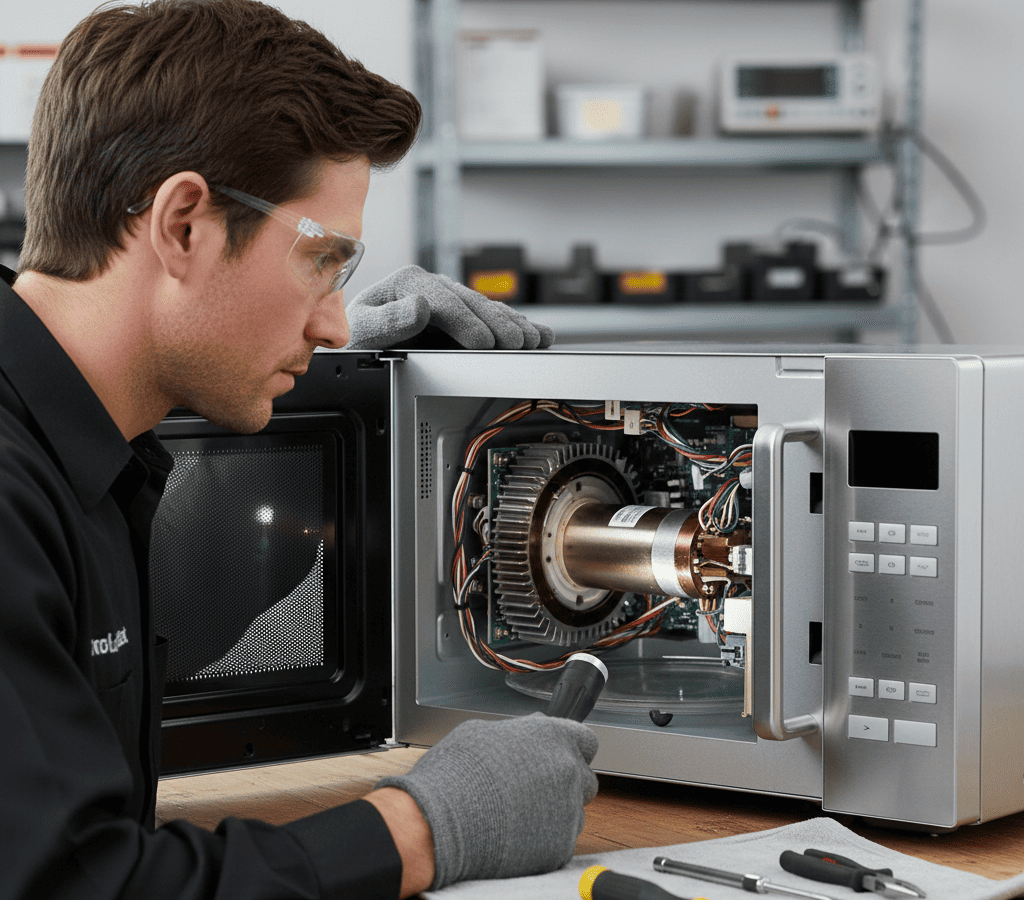
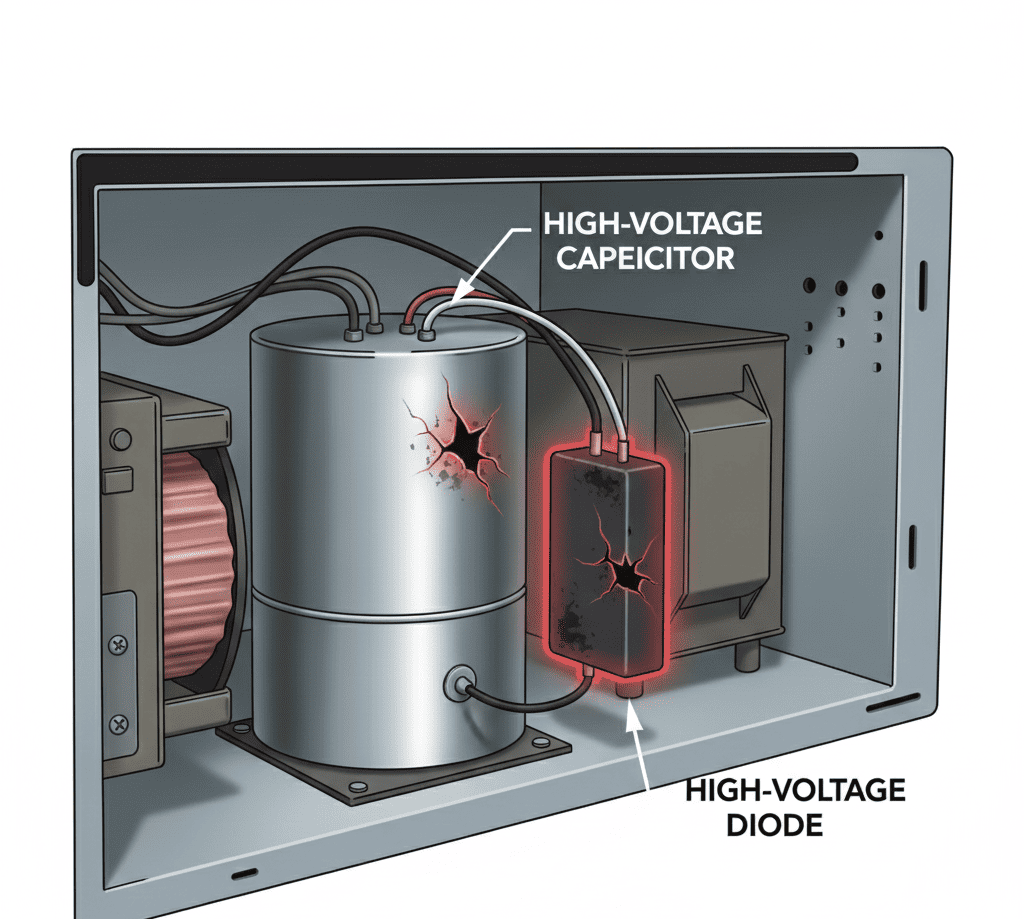
Capacitor or Diode Failure — A High Voltage Issue
The capacitor and diode work together to power the magnetron. If either stops functioning, the microwave will not heat, even though everything else looks normal.
Typical symptoms include:
- A popping sound
- Burning smell
- Microwave trips the circuit breaker
- No heat despite normal operation
Both components handle dangerous voltage even after the microwave is unplugged, so they should never be inspected at home.
Thermal Fuse or Overheat Protection Activated
Most modern microwaves have a thermal fuse that cuts power if the appliance becomes too hot.
Reasons it may blow:
- Ventilation blocked at the back of the microwave
- Continuous long heating cycles
- Dust buildup
- Fault in other heating components
When the thermal fuse blows, some microwaves stop heating while others stop working entirely. A technician can replace the fuse safely.
Control Board (PCB) Malfunction
The PCB is the brain of your microwave, directing every function. If the heating relay on the board fails, the microwave will run but won’t heat.
You may notice:
- Heating works sometimes but not always
- Buttons respond slowly
- Microwave stops mid-cycle
- Timer runs normally but food stays cold
PCB problems are fairly common in older models or in homes with unstable electricity.
Waveguide Cover Damage — A Simple but Critical Part
Inside your microwave, there is a small plate (usually on the right side) called the waveguide cover.
When it becomes greasy, burnt, or cracked, the heating process is disrupted.
Signs include:
- Sparks inside the microwave
- Burning smell
- Uneven heating
- Food not heating despite correct settings
Replacing the cover is quick, inexpensive, and usually restores heating.
Incorrect Utensils Can Block Heating
Using the wrong container is one of the most common mistakes.
Avoid:
- Metal bowls
- Steel plates
- Utensils with metallic paint
- Aluminum foil
Microwaves bounce off metal and fail to penetrate food, making it appear as if the microwave isn’t heating.
Only use:
- Microwave-safe glass
- Ceramic containers
- Microwave-safe plastic
Overloading the Microwave
If you place too many items inside or put a large container covering most of the turntable, the microwave energy cannot circulate properly.
This results in:
- Cold food
- Uneven heating
- Long cooking time
Try heating a smaller portion to check if the microwave works normally.
If smaller portions heat properly, your magnetron might be weakening.
Internal Wiring or Loose Connections
Loose wires or burnt internal connectors can interrupt the flow of electricity to the magnetron. Wear and tear, heat buildup, or old wiring can cause this.
Because microwaves contain components that store high voltage, internal inspection should always be done by a professional.
Why Kolkata Households Face This Problem Frequently
The heating issue is especially common in:
- Moisture-heavy areas like Park Circus, Kidderpore, Howrah
- Older flats with outdated wiring
- Homes using voltage stabilizers that are too weak
- Areas with frequent load shedding
All these factors can affect magnetron performance, capacitor life, and overall microwave health.
How Repair Expert India Helps in Kolkata
If your microwave still doesn’t heat after basic checks, it’s time to call a technician.
Repair Expert India offers:
- Same-day microwave repair across Kolkata
- Experienced and trained technicians
- On-spot diagnosis
- Genuine spare parts
- Affordable service charges
- 30–90 days service guarantee
Service areas include Salt Lake, New Town, Garia, Behala, Howrah, Tollygunge, Dum Dum, Kestopur, Jadavpur, Rajarhat, and more.
When You Should Stop Using the Microwave Immediately
Stop using the appliance if you notice:
- Sparks inside
- Strong burning smell
- Unusual humming or buzzing
- Repeated tripping of MCB
- Microwave heats inconsistently
These signs indicate internal electrical issues that should not be ignored.
Final Thoughts
A microwave not heating doesn’t always mean an expensive repair. Sometimes the cause is as simple as a door not closing properly, a wrong utensil, or a weak power supply.
But if the issue involves the magnetron, capacitor, diode, thermal fuse, or PCB, you’ll need expert help.
With timely diagnosis and reliable repairs, Repair Expert India ensures your microwave gets back to working perfectly without delay.