How to Protect Your AC During the Rainy Season in Hyderabad
The rainy season in Hyderabad brings relief from summer heat, but it also introduces new problems for air conditioners. Many people assume that ACs need less attention during monsoon because temperatures drop slightly. In reality, the rainy season can quietly damage your AC if proper care is not taken.
Humidity, moisture, voltage fluctuations, and water exposure during monsoon months create conditions that can affect AC performance, safety, and lifespan. Protecting your AC during the rainy season is not complicated, but it does require awareness and timely action.
This blog explains how Hyderabad residents can protect their ACs during monsoon and avoid common rainy-season AC problems.
Why the rainy season is risky for ACs in Hyderabad
Hyderabad experiences heavy rainfall at times, combined with high humidity levels. Moisture in the air easily enters AC components, especially outdoor units and internal electrical parts.
During monsoon, power cuts and voltage fluctuations are also common. These sudden changes can damage AC circuits and compressors if protection is missing.
Another issue is reduced usage. Many people stop using their AC frequently during rains, which allows moisture and dust to settle inside the unit, leading to corrosion and mold growth.
Moisture and humidity affect internal AC components
High humidity allows moisture to accumulate inside filters, coils, and drainage lines. If an AC is not cleaned or serviced, this moisture mixes with dust and creates mold and bacteria buildup.
When the AC is switched on after a gap, this can cause bad smell, poor airflow, and unhealthy indoor air. Over time, internal corrosion can reduce cooling efficiency and damage components.
Keeping the AC clean and dry during monsoon is essential, even if usage is low.
Outdoor unit protection is extremely important
The outdoor unit is the most exposed part of the AC during the rainy season. Continuous rainwater exposure can lead to rusting, wiring damage, and fan motor issues.
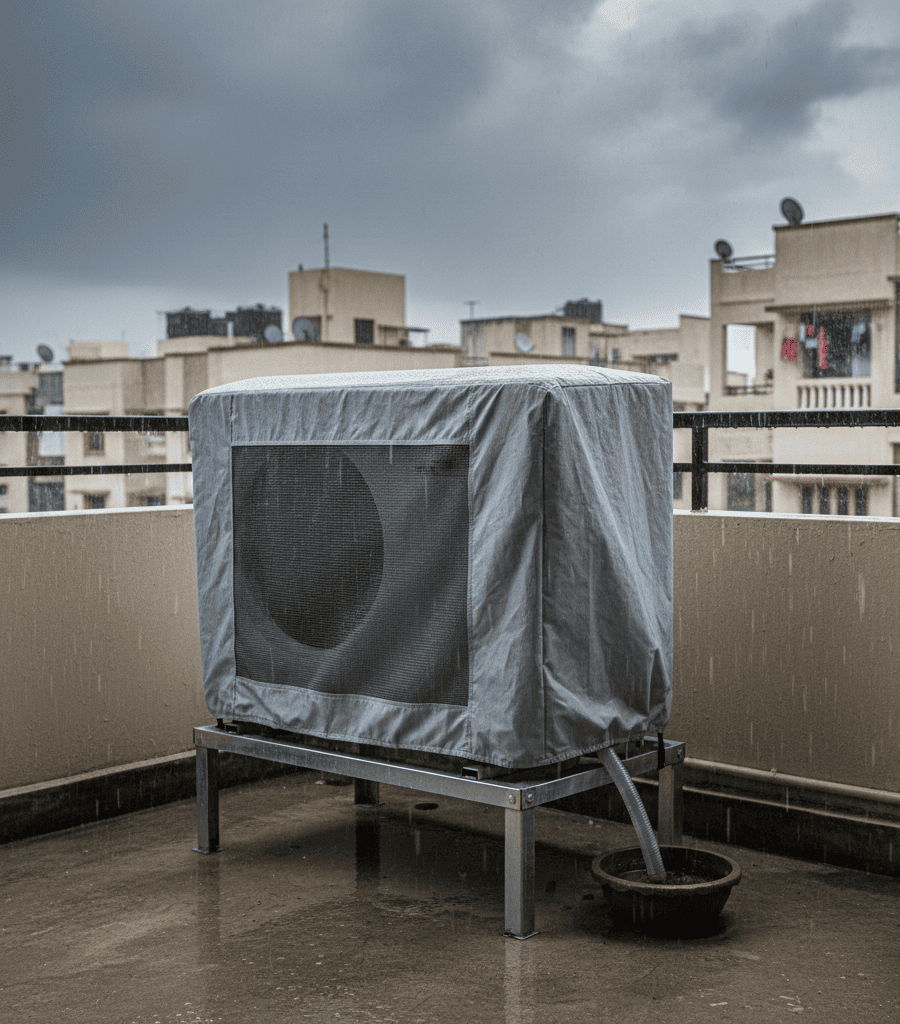
The outdoor unit should be placed on a raised platform to prevent waterlogging. Drainage around the unit must be clear so rainwater does not collect at the base.
Using a proper AC outdoor cover when the unit is not in use helps protect it from direct rain, dirt, and debris. However, the cover should be breathable and removed when the AC is running to avoid overheating.
Electrical safety should never be ignored during monsoon
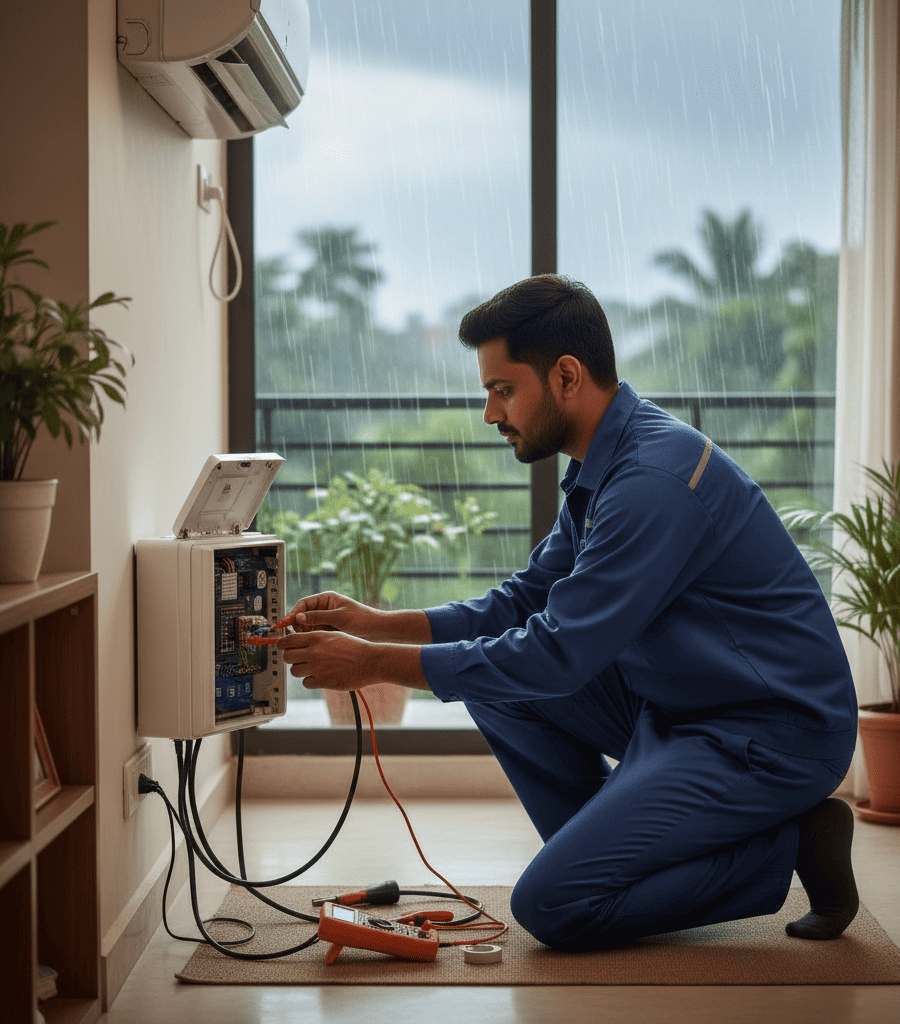
Monsoon season often brings voltage fluctuations and short power interruptions. These are dangerous for AC systems, especially inverter ACs with sensitive electronic boards.
Using a stabilizer or surge protector designed for ACs helps protect the unit from sudden voltage spikes. Proper earthing is equally important to prevent electrical hazards.
If you notice frequent tripping or unusual behavior during rains, it is safer to switch off the AC and get it checked rather than risking long-term damage.
Drainage issues become common during rains
Blocked drainage lines are one of the most common AC problems during monsoon. Dust, algae, and debris mix with moisture and clog the drain pipe.
When drainage is blocked, water leaks from the indoor unit and damages walls, furniture, or electrical points. Many Hyderabad homes face this issue every monsoon.
Regular drain cleaning and inspection prevent water leakage and foul smell problems.
Reduced AC usage can also cause problems
Many people stop using their AC for days or weeks during the rainy season. While this seems harmless, long periods of inactivity allow moisture to settle inside the unit.
This can lead to mold growth, bad odor, and internal corrosion. Running the AC occasionally in dry mode or fan mode helps keep internal parts dry and prevents moisture buildup.
Even short usage helps maintain internal airflow and component health.
Servicing before or during monsoon makes a big difference
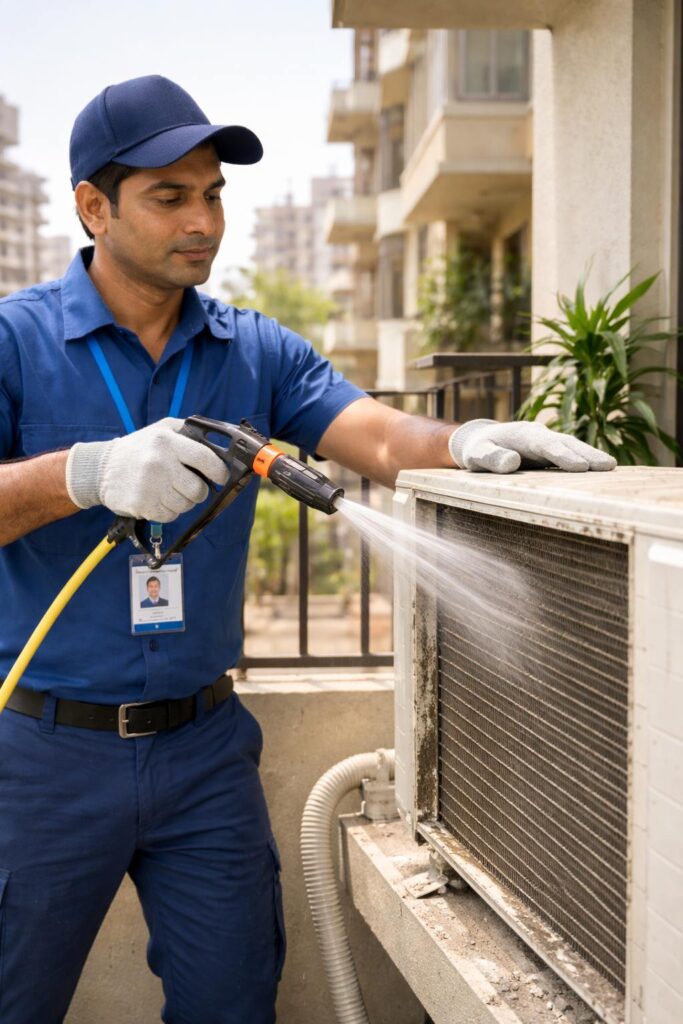
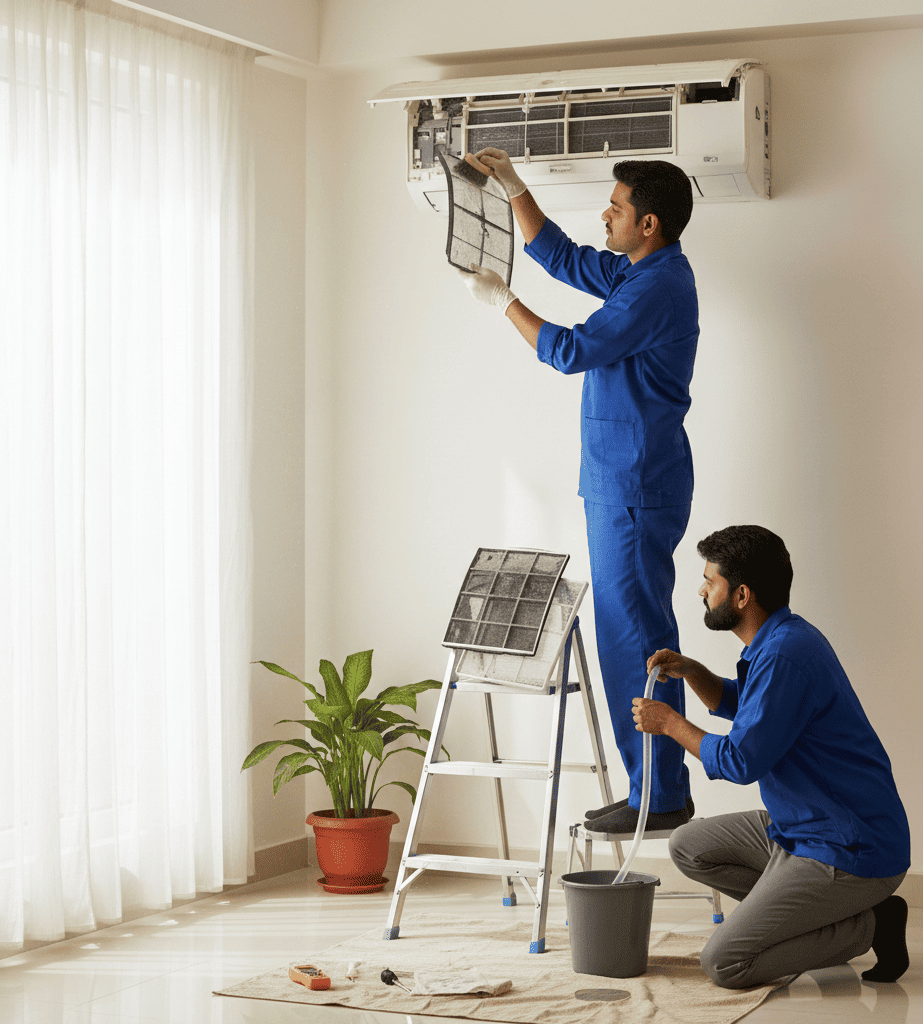
Monsoon is a good time for preventive AC servicing. Servicing cleans filters, coils, and drainage lines, removing dust and moisture-prone buildup.
It also allows technicians to check electrical connections, insulation, and gas pressure. Identifying small issues early prevents bigger problems later.
In Hyderabad, servicing before or early in the rainy season helps prepare the AC for both monsoon humidity and the next summer cycle.
Avoid common monsoon mistakes with ACs
Covering the outdoor unit with plastic sheets without ventilation can trap moisture and cause rust. Using improper covers is harmful.
Ignoring strange smells or water leakage during rains often leads to bigger damage. These signs should be addressed immediately.
Switching the AC on during heavy rain without proper protection or earthing increases electrical risk.
Final thoughts for Hyderabad AC users
The rainy season may reduce heat, but it increases the risk of hidden AC damage. Moisture, humidity, and electrical instability quietly affect AC performance if precautions are not taken.
Protecting your AC during monsoon is about small habits. Keep the unit clean, protect the outdoor unit, ensure electrical safety, maintain proper drainage, and do not skip servicing.
If your AC shows any unusual signs during the rainy season or has not been serviced recently, it is better to get it inspected early rather than wait for problems to grow.
A little care during Hyderabad’s rainy season can keep your AC safe, efficient, and ready for the next summer without expensive repairs.