Why Is My AC Remote Sensor Not Working? Call Now for Fast AC Repair in Hyderabad
When your AC remote stops responding properly, it can be extremely frustrating. You press the buttons, change the temperature, try different modes, but nothing happens. Sometimes the AC responds after several tries, and sometimes it does not respond at all. Many people think the remote itself is faulty, but in reality, the problem is often related to the AC remote sensor inside the indoor unit.

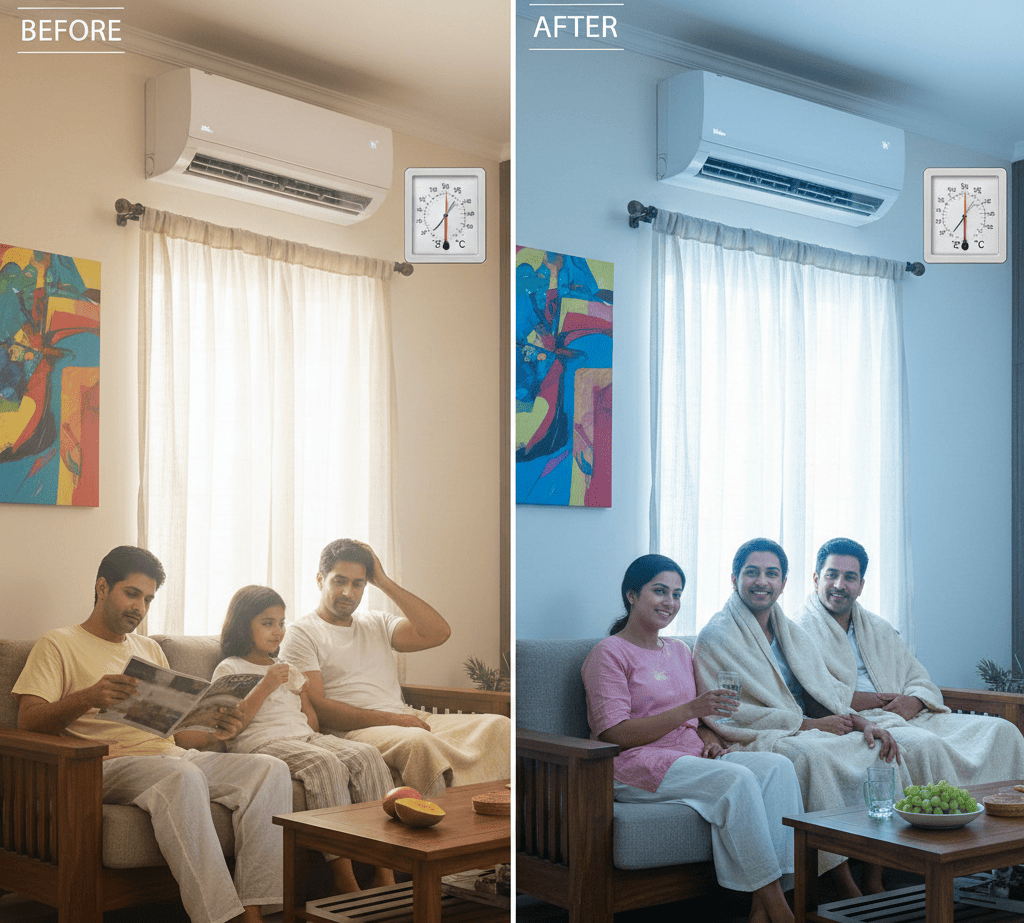
If your AC remote sensor is not working, your air conditioner cannot receive commands correctly. This is not a small issue. It directly affects comfort, cooling control, and overall AC performance. In a city like Hyderabad, where AC usage is heavy for most of the year, even a small control issue can turn daily life uncomfortable very quickly.
Understanding why the AC remote sensor stops working and acting on time can save you from bigger repairs and unnecessary replacement costs.
The AC remote sensor is usually located inside the indoor unit, near the display panel. Its job is to receive infrared signals sent by the remote control and pass them to the AC’s control board. When this sensor fails or does not work properly, the AC cannot understand the commands you send.
You may notice symptoms like the AC not turning on or off, temperature not changing, modes not switching, or delayed response to the remote. These signs clearly indicate a sensor-related issue, not just a weak remote battery.
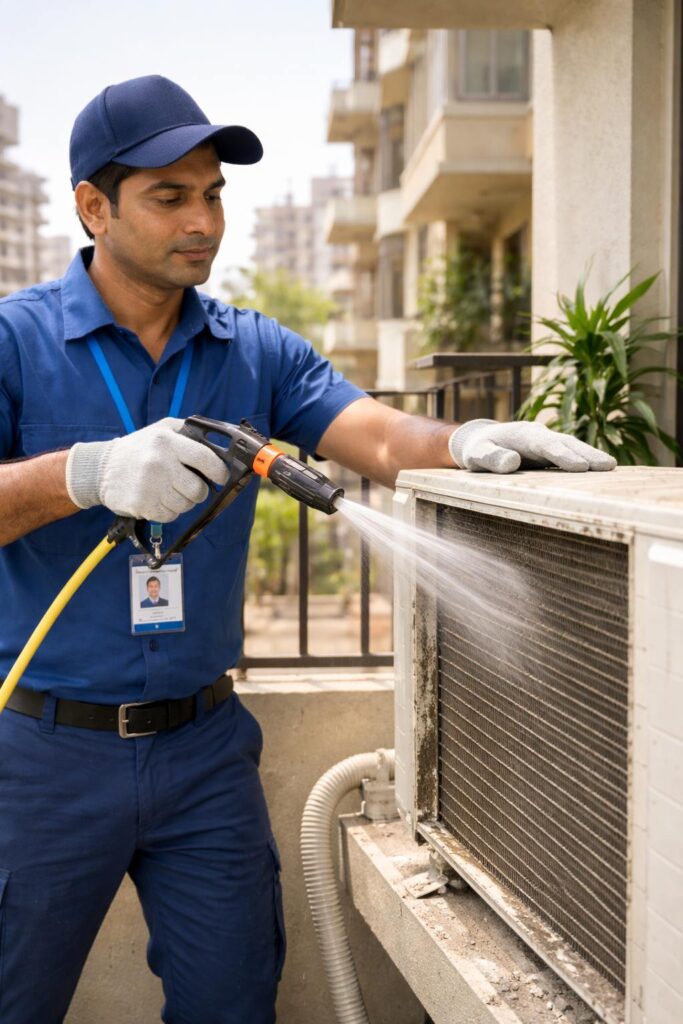
One of the most common reasons for AC remote sensor problems is dust and dirt buildup. Over time, dust accumulates on the sensor area, blocking the infrared signal. This is especially common in homes where regular AC servicing is skipped.
In Hyderabad’s dusty environment, sensors can get dirty much faster. When the signal cannot reach the sensor properly, the AC appears unresponsive even though the remote is working fine. A simple cleaning during professional servicing often solves this issue, but if ignored, it can lead to permanent sensor damage.
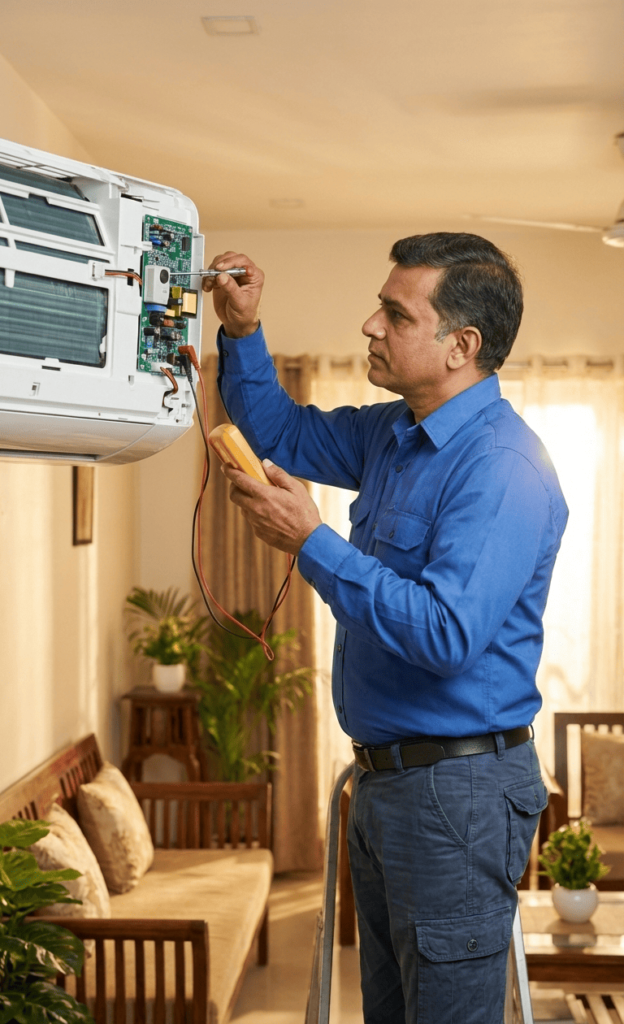
Another major cause is sensor misalignment or internal damage. The sensor is a small and delicate component. Rough handling during cleaning, installation, or previous repairs can loosen or damage it. Sometimes the sensor shifts slightly from its correct position, making it difficult to receive signals.
In such cases, the AC may respond only when the remote is held at a certain angle or very close to the unit. This is a clear sign that the sensor needs inspection by a trained technician.
Electrical issues inside the AC can also affect the remote sensor. Loose wiring, voltage fluctuations, or control board problems can interrupt communication between the sensor and the main system. When this happens, the sensor may receive the signal but fail to pass it correctly to the AC.
Many homeowners in Hyderabad experience voltage fluctuations, which slowly damage sensitive electronic components. Without proper diagnosis, people often replace the remote unnecessarily, while the real issue remains inside the AC.
Sometimes the problem is not the sensor itself but interference from external sources. Strong lighting, direct sunlight falling on the indoor unit, or nearby electronic devices can interfere with infrared signals. This can cause inconsistent response from the AC.
While this issue is less common, it does happen in certain room layouts. A professional technician can quickly identify whether the issue is environmental or internal.
Remote sensor problems can also occur due to PCB or control board faults. The sensor sends signals to the PCB, which then executes the command. If the PCB is damaged or partially faulty, the AC may ignore commands or behave unpredictably.
PCB issues are serious and should never be ignored. Continuing to use the AC in this condition can lead to complete system failure. Early detection helps avoid expensive replacements.
Many people try quick fixes like changing remote batteries, buying a new remote, or restarting the AC multiple times. While battery replacement is always worth trying first, repeated failures indicate that the issue is deeper.
Replacing the remote without checking the sensor often wastes money. If the sensor or internal wiring is faulty, a new remote will not solve the problem.
Ignoring a non-working AC remote sensor creates daily inconvenience and can cause further damage. Without proper control, users often switch the AC on and off directly from the power source, which is unsafe and harmful to electrical components.
Over time, this stress can damage the PCB, relays, and internal wiring. What started as a small sensor issue can turn into a major electrical repair.
Regular AC servicing plays a big role in preventing sensor issues. During servicing, technicians clean the sensor area, check signal response, inspect wiring, and test the remote functionality. This preventive care keeps control systems working smoothly.
Unfortunately, many people skip regular service until a major problem occurs. Sensor failure is often an early warning sign that internal maintenance has been neglected.
If your AC remote sensor is not working properly, professional inspection is the safest solution. Our AC repair service in Hyderabad focuses on accurate diagnosis, not guesswork. Our trained technicians inspect the remote, sensor, wiring, and control board to find the exact cause.
We repair and replace sensors only when necessary. No unnecessary parts, no temporary fixes. Whether the issue is dust-related, electrical, or PCB-related, we handle it with proper tools and experience.
We service all major AC brands and models, including split and window ACs. Our technicians understand how different models handle remote sensors and control systems. This allows us to fix the problem quickly and correctly.
If your AC is not responding to the remote, do not wait until the system stops working completely. Control issues often lead to bigger electrical failures if ignored.
Call now and book fast AC repair in Hyderabad. Let our experts restore full control of your AC and bring back hassle-free cooling to your home.
Your AC should respond instantly when you press the remote. If it does not, that is your signal to act now.