AC Gas Leakage Warning Signs You Must Not Ignore – Book Expert Inspection Now
If your air conditioner suddenly stops cooling properly, one of the most common and expensive hidden reasons is AC gas leakage. Many people ignore early signs and keep running the AC, which slowly damages the compressor and increases electricity bills. By the time they call a technician, the repair cost becomes much higher than it should have been.
This detailed guide will help you identify AC gas leakage early, understand why it happens, what symptoms to watch for, and what actions you should take immediately. Everything is explained clearly, without technical confusion, so you can make the right decision at the right time.
What Is AC Gas and Why Leakage Is Serious
AC gas, also called refrigerant, is responsible for absorbing heat from your room and releasing it outside. Without the correct gas level, cooling becomes weak or completely stops.
Gas leakage is serious because:
- Cooling efficiency drops gradually
- Compressor starts overheating
- Power consumption increases
- Internal AC parts get damaged
- Repair cost multiplies if delayed
Running an AC with low gas is one of the fastest ways to destroy a compressor.
How AC Gas Leakage Usually Happens
AC gas does not get used up like fuel. If gas is low, it means there is a leak somewhere in the system.
Common causes include:
- Poor installation or loose flare nuts
- Old copper pipes developing cracks
- Corrosion in coils over time
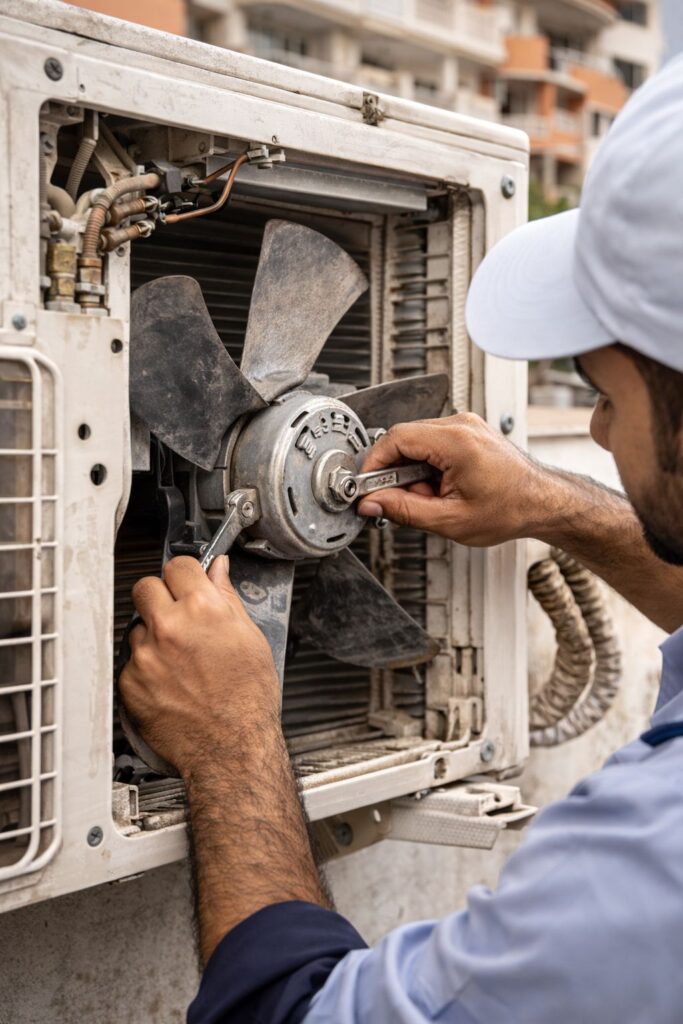
- Vibration damage in outdoor unit
- Physical damage during shifting or renovation
- Low-quality welding done in past repairs
Even a small leak can slowly drain gas over weeks or months.
Early Signs That Indicate AC Gas Leakage
Gas leakage symptoms usually appear gradually. That is why people often miss them.
The first thing most users notice is reduced cooling. The AC runs longer than usual but the room never feels comfortable. You may feel slightly cool air, but it is not enough, even at low temperature settings.
Another common sign is AC running continuously without reaching set temperature. This puts extra load on the compressor and increases your electricity bill.
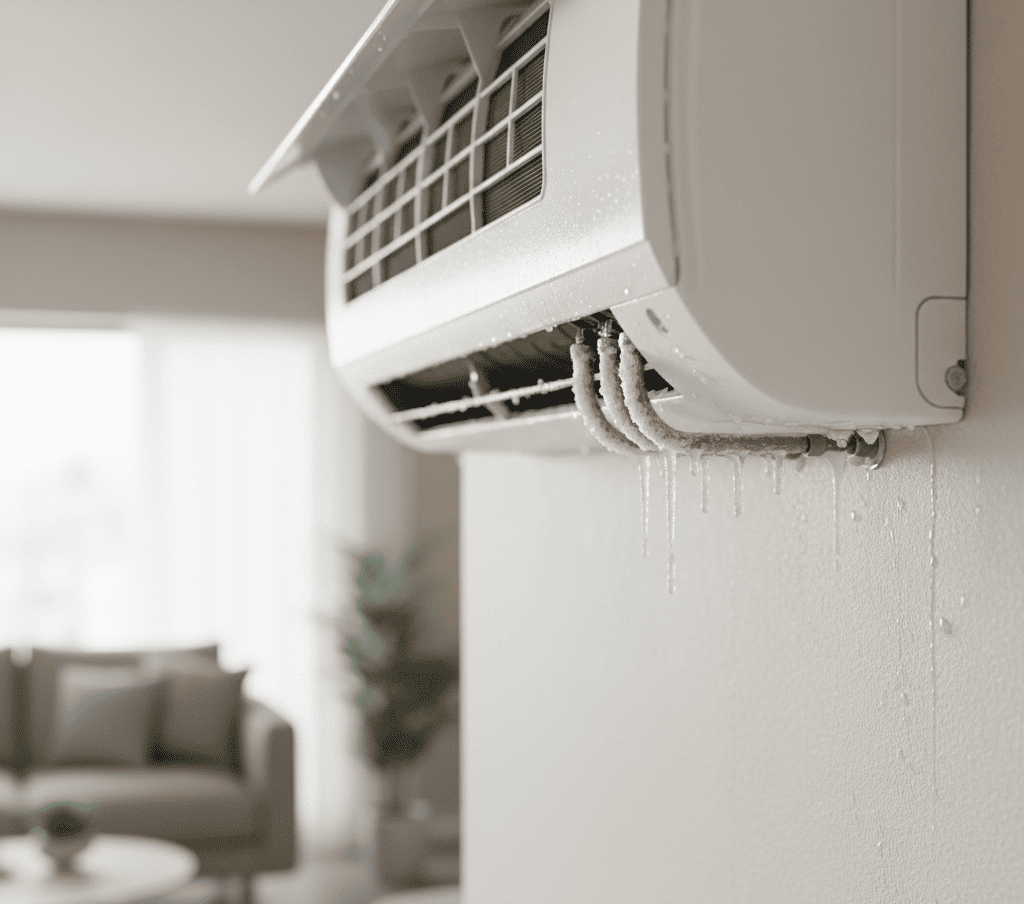
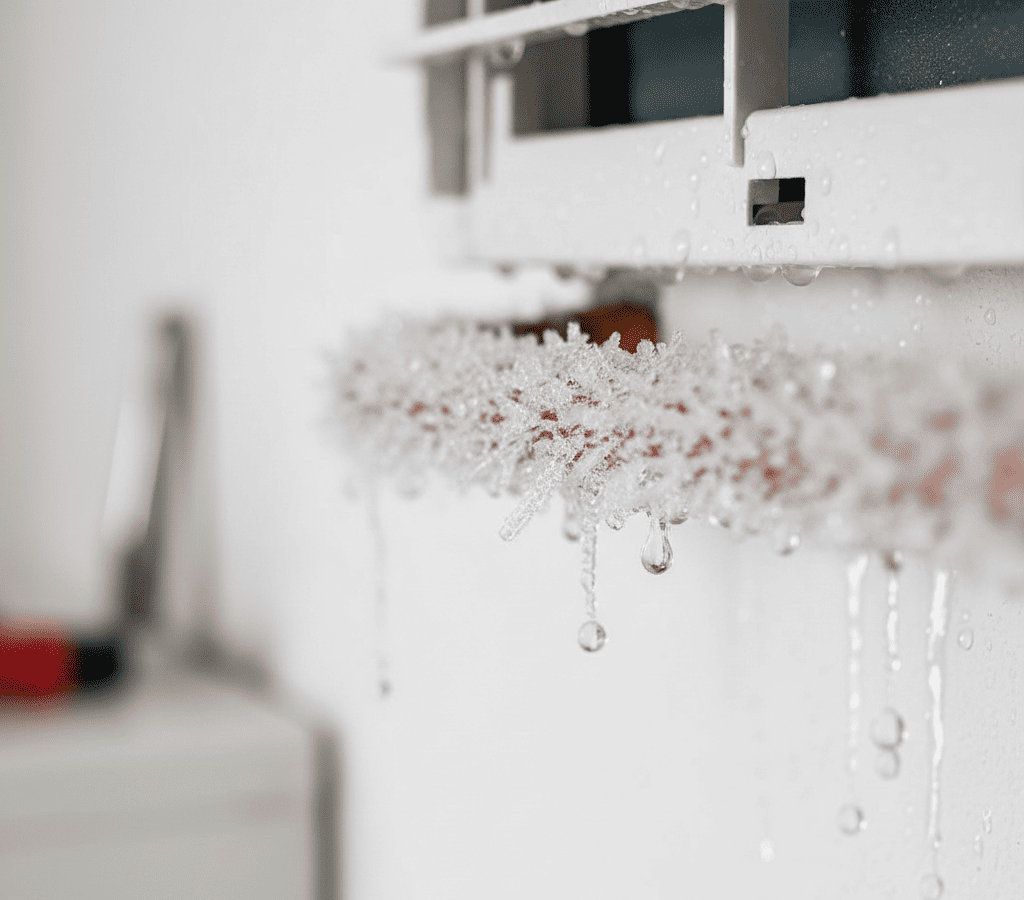
Some users notice ice formation on copper pipes or indoor unit coils. This happens because low gas pressure causes abnormal cooling, leading to freezing.
A hissing or bubbling sound near the indoor or outdoor unit can also indicate gas escaping, especially in bigger leaks.
In many cases, people experience burning smell or hot air from the outdoor unit, which means the compressor is struggling due to low gas.
How to Identify AC Gas Leakage at Home (Without Tools)
You cannot confirm leakage 100% without professional tools, but you can spot strong warning signs.
Check your cooling performance. If your AC used to cool well and suddenly does not, without any change in weather or room size, gas leakage is possible.
Touch the copper pipe connected to the outdoor unit. It should feel cool and slightly wet. If it feels dry or not cold enough, gas level may be low.
Look for ice on pipes or indoor unit. Ice formation is not normal and should never be ignored.
Observe power consumption. If your electricity bill increases while cooling quality drops, gas leakage is a strong possibility.
If your AC was refilled recently and cooling dropped again within a few months, leakage is almost certain.
Why Ignoring Gas Leakage Is a Big Mistake
Many people think refilling gas will solve the problem. This is a costly mistake.
If leakage is not fixed:
- Gas will leak again
- Compressor will overheat
- Compressor oil may burn
- PCB and electrical parts may get damaged
- AC lifespan reduces sharply
Gas refilling without leak detection is a temporary solution that wastes money.
Professional Methods Used to Detect AC Gas Leakage
A trained technician uses proper techniques to identify the exact leakage point.
Soap solution testing helps detect small leaks at joints and flare nuts.
Pressure testing with nitrogen is used to check leaks in copper pipes and coils.
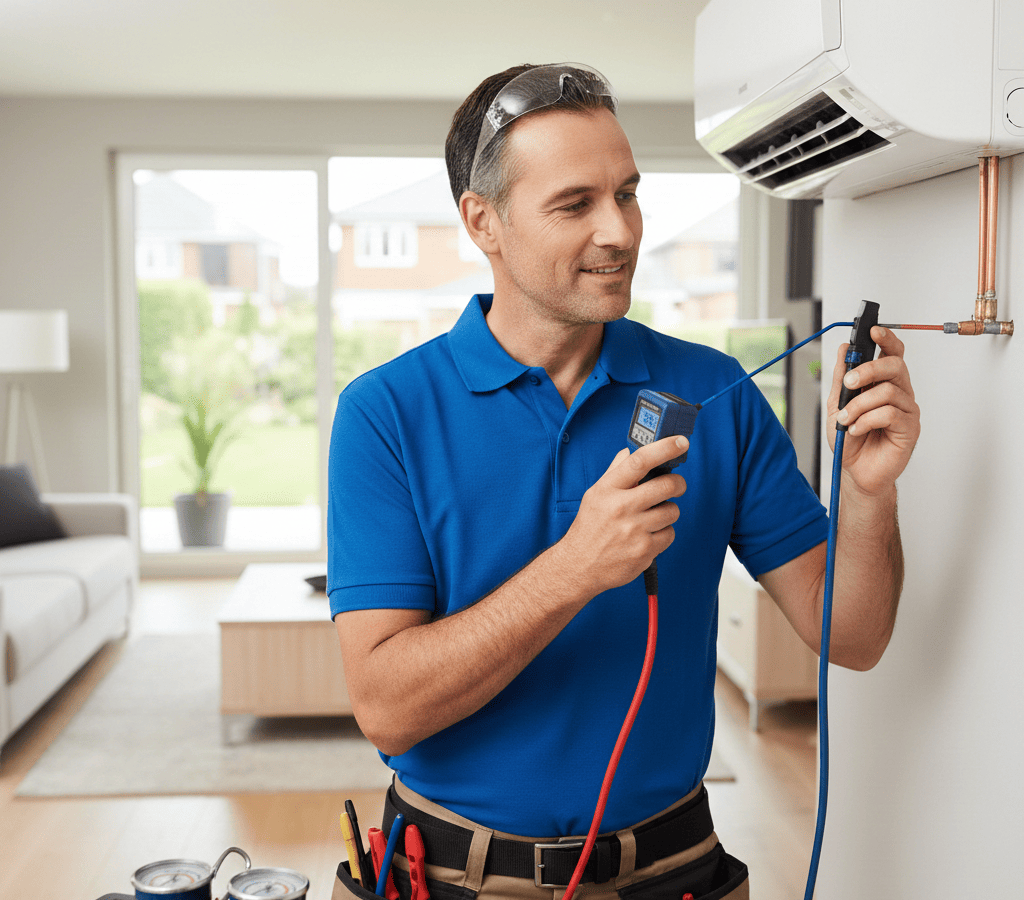
Electronic leak detectors identify even minute gas leaks that are not visible.
Vacuum testing ensures the system is airtight before refilling gas.
A proper technician always finds and fixes the leak before adding gas.
What To Do If You Suspect AC Gas Leakage
The moment you suspect leakage, stop using the AC continuously. Running it longer will cause more damage.
Call an experienced AC technician and ask specifically for leak detection, not just gas filling.
Insist on proper repair:
- Leakage point identification
- Welding or pipe replacement if required
- Pressure testing
- Vacuuming
- Correct gas refilling as per AC type
Avoid technicians who offer only “top-up gas” without inspection.
Cost Impact of AC Gas Leakage
The cost depends on how early you act.
Early-stage leakage usually requires minor welding and gas refill, which is affordable.
Delayed cases often result in:
- Compressor damage
- Coil replacement
- Major electrical repairs
In many cases, ignoring leakage turns a small repair into a major expense.
Can AC Gas Leakage Be Prevented?
Yes, most leakage issues are preventable.
Always get your AC installed by a skilled technician.
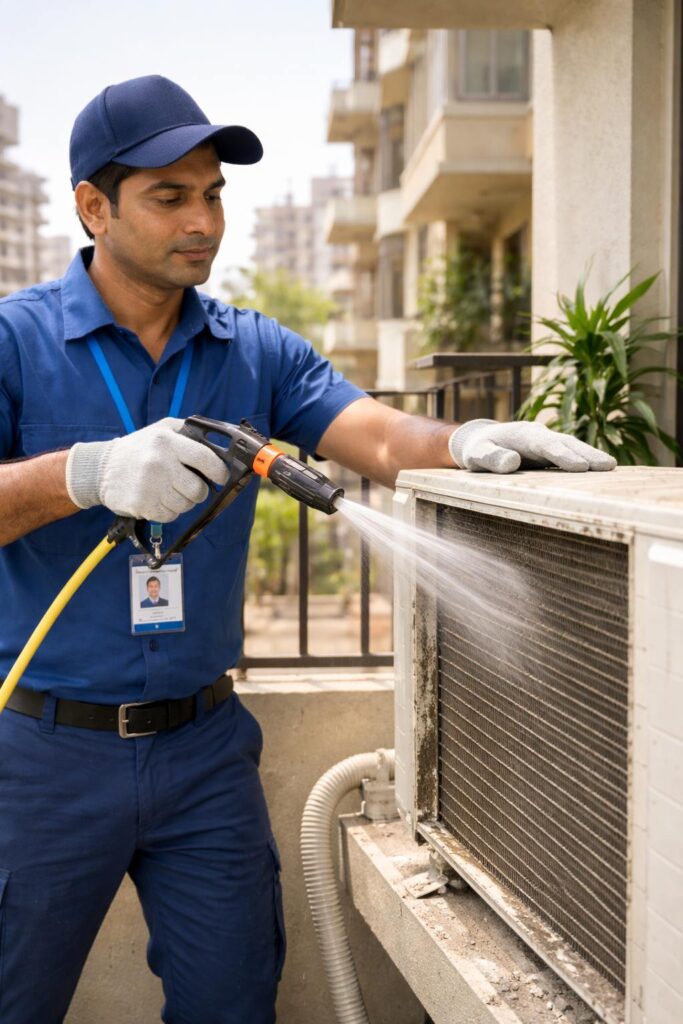
Service your AC at least once a year, especially before summer.
Do not ignore weak cooling or ice formation.
Avoid shifting AC units without professional support.
Ensure proper outdoor unit ventilation to reduce vibration stress.
Small preventive steps save big repair costs.
Gas Leakage in Old vs New AC Units
New AC units usually face leakage due to poor installation.
Older AC units often leak because of corrosion and worn-out copper pipes.
If your AC is very old and leakage keeps recurring, replacing the unit may be more economical than repeated repairs.
An honest technician will guide you correctly based on condition, not just cost.
Final Thoughts
AC gas leakage is not a minor issue. It is a silent problem that slowly damages your air conditioner and your wallet. The earlier you identify it, the more money and stress you save.
If your AC is not cooling properly, running continuously, or forming ice, do not wait. Get it checked professionally and fix the root cause, not just the symptom.
AC Not Cooling Properly? Suspect Gas Leakage – Get Expert Inspection Today
Do not risk compressor damage. Call a trained AC technician, detect the leak accurately, and restore proper cooling the right way.