Inverter AC vs Non-Inverter AC – Full Comparison Explained Simply
When buying a new air conditioner, one of the most confusing decisions is choosing between an Inverter AC and a Non-Inverter AC. Many people hear that inverter ACs save electricity, while non-inverter ACs are cheaper, but very few understand what this actually means in real-life usage.
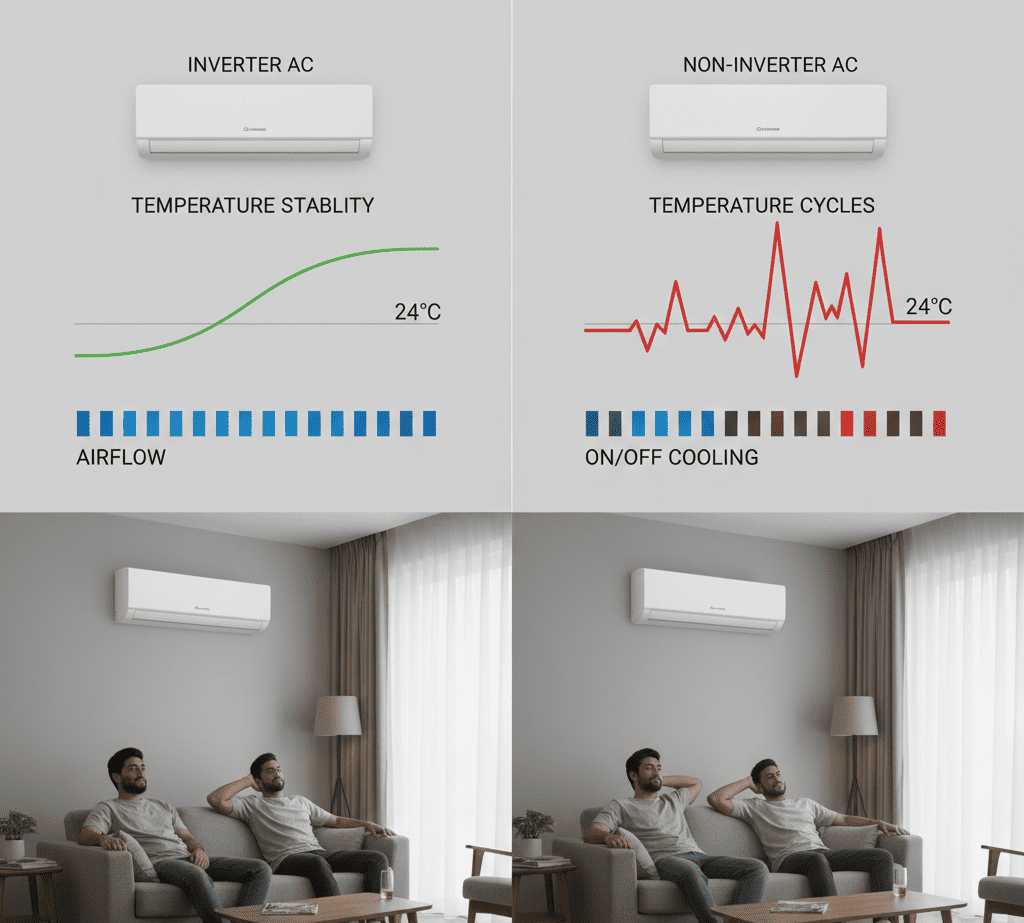
This detailed comparison will help you clearly understand the difference between inverter and non-inverter ACs so you can choose the right option for your home, budget, and daily usage.
What Is a Non-Inverter AC?
A non-inverter AC works on a basic mechanism. The compressor operates in only two modes: fully ON or completely OFF.
When the room temperature rises above the set level, the compressor turns on and runs at full power. Once the desired temperature is reached, the compressor switches off entirely. This cycle repeats continuously throughout operation.
Because the compressor keeps starting and stopping, it consumes more electricity and creates noticeable temperature fluctuations inside the room.
What Is an Inverter AC?
An inverter AC uses advanced variable-speed technology. Instead of switching the compressor on and off repeatedly, it adjusts the compressor speed according to the cooling requirement of the room.
Initially, it runs at a higher speed to cool the room quickly. Once the desired temperature is achieved, it slows down and maintains the temperature steadily. The compressor keeps running at lower power rather than stopping completely.
This smart operation results in lower electricity consumption, quieter performance, and more stable cooling.
Power Consumption Difference
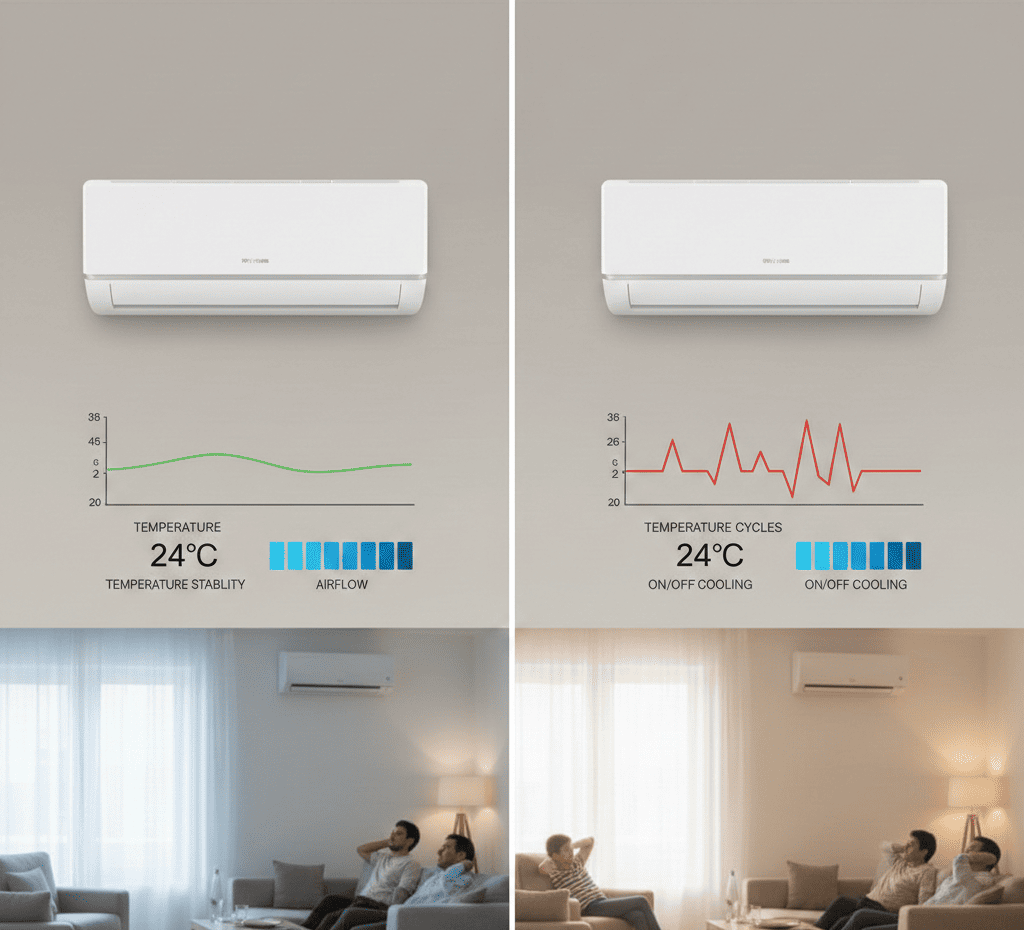
Power consumption is the biggest factor that separates inverter and non-inverter ACs.
A non-inverter AC consumes more electricity because the compressor restarts frequently and always runs at full capacity. An inverter AC consumes less electricity by adjusting power usage based on room conditions.
If your AC usage is long and regular, an inverter AC can significantly reduce your electricity bills over time.
Initial Cost Comparison
Non-inverter ACs are more affordable at the time of purchase, making them suitable for buyers with a limited budget.
Inverter ACs have a higher initial price due to advanced technology and electronic components. However, the higher upfront cost is often recovered through reduced electricity bills in the long run.
Cooling Comfort and Performance
Non-inverter ACs provide uneven cooling because the compressor switches on and off repeatedly. This can cause sudden drops and rises in room temperature.
Inverter ACs deliver smooth and consistent cooling by maintaining a steady compressor speed. This creates a more comfortable indoor environment, especially during long usage periods.
Noise Levels
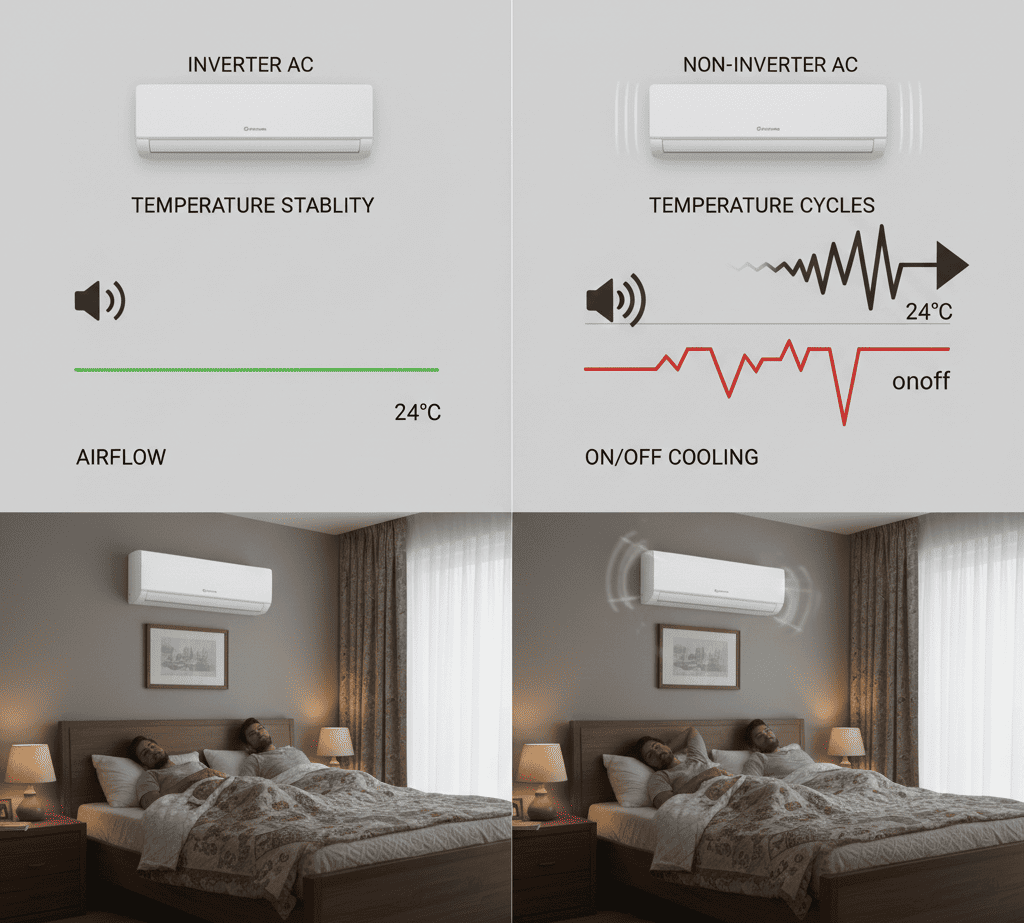
Non-inverter ACs are comparatively noisier because the compressor starts at full power every time it turns on.
Inverter ACs operate much more quietly since the compressor runs continuously at controlled speeds. This makes inverter ACs ideal for bedrooms and offices where low noise is important.
Energy Efficiency and Star Ratings
Non-inverter ACs usually come with lower energy efficiency ratings and consume more units of electricity.
Inverter ACs easily achieve higher BEE star ratings due to their efficient power management. A high-star inverter AC can save a substantial amount of electricity each year.
Maintenance and Repair Costs
Non-inverter ACs have a simpler design, making repairs generally cheaper and easier.
Inverter ACs use advanced electronic components, so repair costs can be higher if a major component fails. However, regular servicing costs are almost the same for both types.
With proper maintenance and voltage protection, inverter ACs are reliable and long-lasting.
Voltage Fluctuation Handling
Non-inverter ACs are more sensitive to voltage fluctuations and may require an external stabilizer in areas with unstable power supply.
Inverter ACs are better equipped to handle voltage variations because of built-in electronic control systems. Many inverter models can operate safely without a stabilizer.
Cooling Speed
Non-inverter ACs take more time to cool the room because the compressor works in fixed cycles.
Inverter ACs provide faster initial cooling by operating at higher speeds when required, which is especially helpful during peak summer heat.
Which AC Is Better for Home Use?
A non-inverter AC is suitable if your usage is occasional, daily running hours are limited, and upfront cost matters more than electricity savings.
An inverter AC is the better option if you use your AC daily for long hours, want lower electricity bills, prefer silent operation, and plan to use the AC for many years.
Long-Term Cost Comparison
While non-inverter ACs appear cheaper initially, long-term electricity expenses change the overall cost picture.
Non-inverter ACs consume more power every month, increasing electricity bills year after year. Inverter ACs may cost more initially but save a significant amount of money over five to seven years of usage.
For regular users, inverter ACs are more economical in the long run.
Common Misunderstandings About Inverter ACs
Many people believe inverter ACs are expensive to maintain, but regular service costs are similar to non-inverter ACs. Only major electronic repairs cost more.
Some think inverter ACs are not suitable for Indian weather, which is incorrect. They are designed to perform efficiently even in extreme heat conditions.
There is also a belief that electricity savings are minimal, but for daily users, savings are very noticeable.
Final Verdict
There is no single AC that is perfect for everyone.
Non-inverter ACs are suitable for limited usage and lower upfront budgets. Inverter ACs are ideal for those who want comfort, energy efficiency, and long-term savings.
Before making a decision, always consider your daily usage, electricity rates, room size, and long-term plans. Choosing the right AC based on real needs will help you save money and enjoy better cooling comfort.